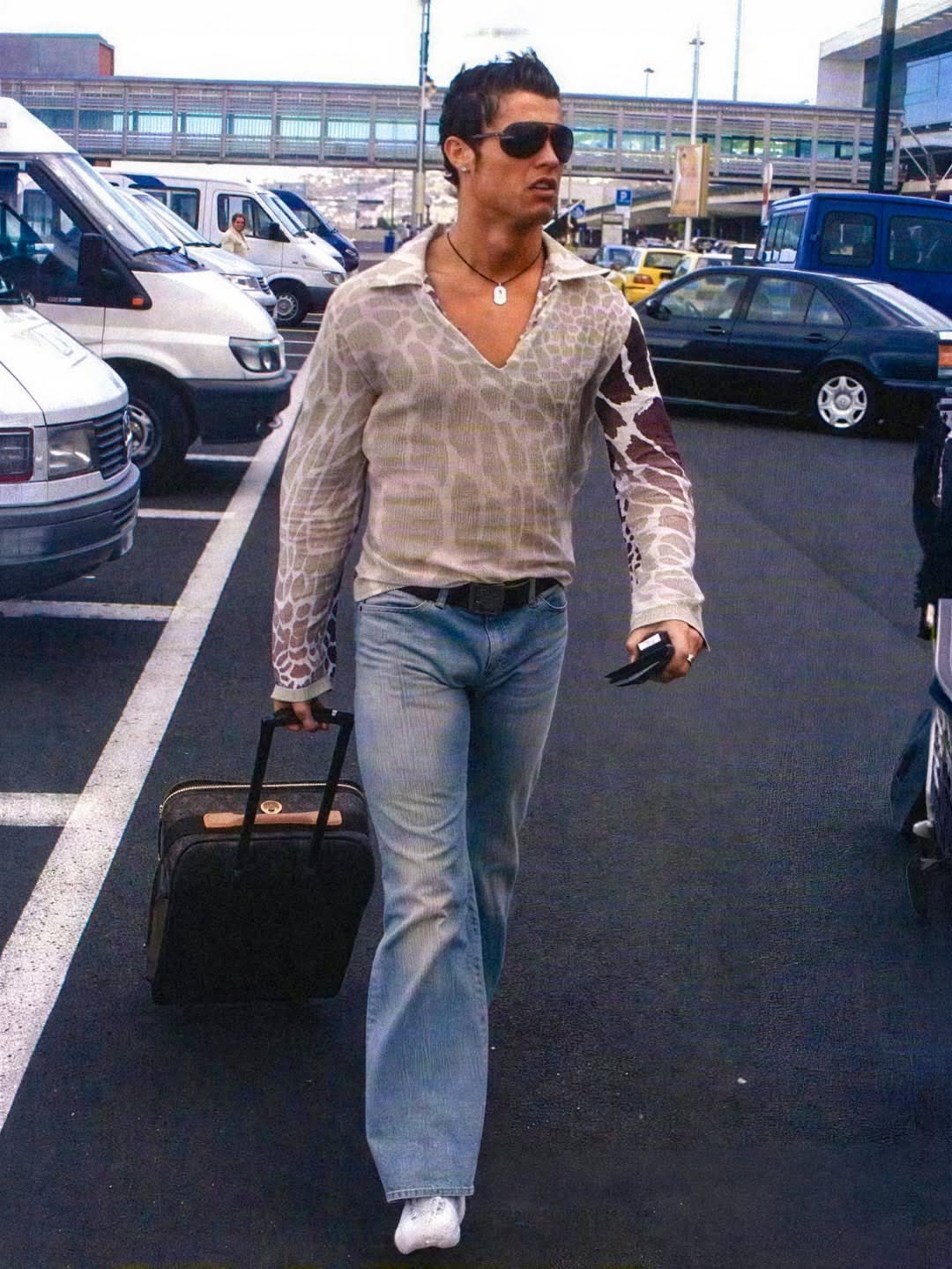
Take a plain white t-shirt — the kind you buy in a multipack, the kind nobody thinks twice about. Put it on Cristiano Ronaldo. Now take something from Prada, a real piece, the kind with the quiet logo and the perfect seam. Put it on a man who has genuinely never once thought about what he eats or how he carries himself.
Which image stays with you?
You already know. And that answer contains the most important style lesson I've ever come across — one the fashion world is never going to say out loud because it would make half of what they sell pointless: the canvas always outranks the paint.
I'm 23, I model, and I've had other jobs and other lives before this one. Every single time I was getting ready — for a casting, for a shift, for anything where I had to show up and be seen — there was always this version of Ronaldo in the back of my head. Not the specific outfit. Just the standard.
“Clothes are a multiplier, not a foundation. Ronaldo understood this before he understood anything about fashion — and that order is everything.”
The White Tee Theory
Fashion loves to sell you the idea that the right purchase fixes everything. The right jacket. The right drop. The right collaboration. What it doesn't say is that when a man with single-digit body fat, a posture built in a Portuguese academy, and a face that reads from across a room walks in wearing a plain white tee and dark jeans — every single head turns. Not because of what he's wearing. Because of what he spent twenty years becoming.
We call it “effortless.” It is the furthest thing from effortless. It's the result of a discipline so deep and consistent that it becomes invisible, and only the outcome remains. What we're reading as style is actually the residue of a thousand mornings where he didn't skip, didn't settle, didn't take the easy version of anything.
The white tee theory is simple: a well-fitting basic on someone who has done the foundational work will always beat a tailored luxury piece on someone who hasn't. Always. The garment is the headline. The body is the publication. A great headline in a failing publication means absolutely nothing.
The Skinny Kid Who Made a Decision
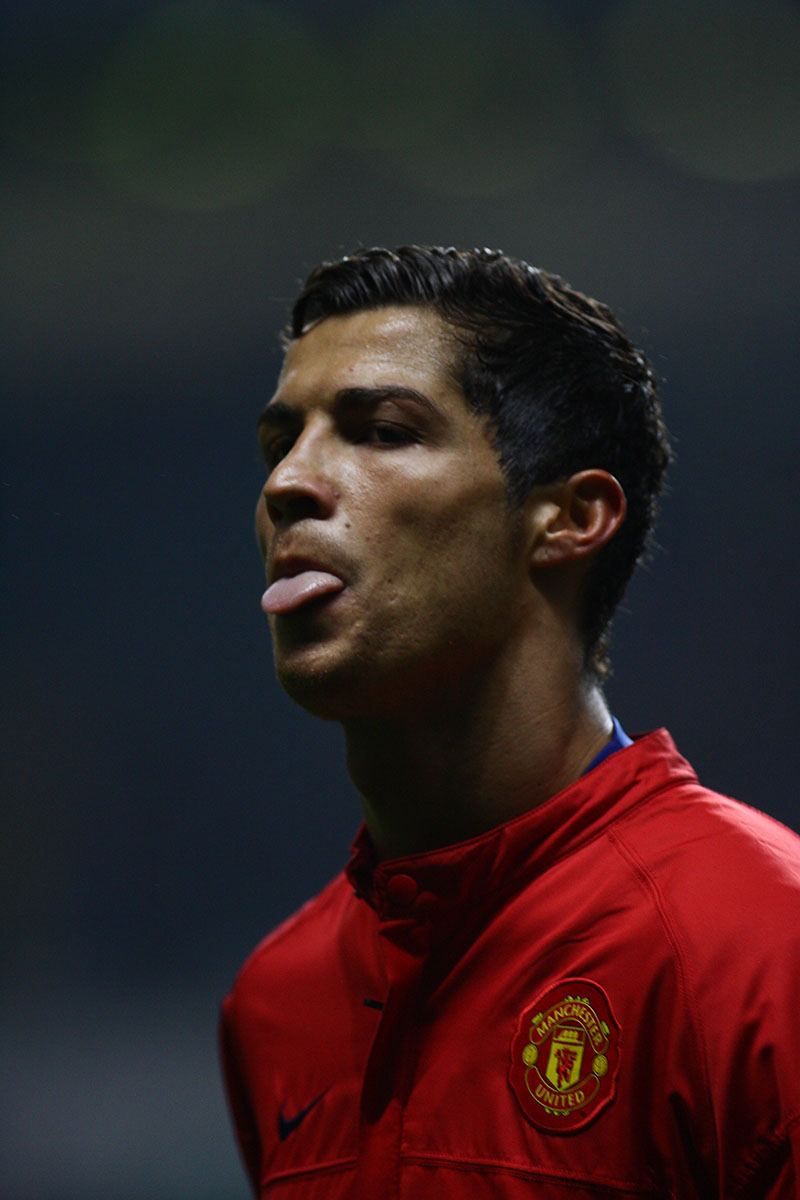
Young Ronaldo at Sporting Lisbon — the canvas before the work began
Here is what most people forget: Ronaldo was not always built like this. Go back to the early Sporting Lisbon footage, the first seasons at Old Trafford. You see a kid — genuinely slim, almost slight, fast because of genetics and youth, not because of muscle. The silhouette that now fills out every jacket, every suit, every plain white tee he puts on? That was not given to him. He looked at himself and decided to build it.
This is the part that deserves more attention than it gets. Look across football — actually look. Messi is the greatest player alive by most accounts, and he is not built. Neymar is electrifying and he is not built. Modric, Xavi, Iniesta — generational talents, none of them built. Being world-class at football does not require the body that Ronaldo has. The sport did not ask him for it. He built it anyway.
Because he saw a version of himself he wanted to make real, and he treated his own body as a long-term project he was going to complete whether the sport required it or not. That specific, deliberate, self-imposed decision separates him from every other athlete of his era in a way that goes beyond football entirely.
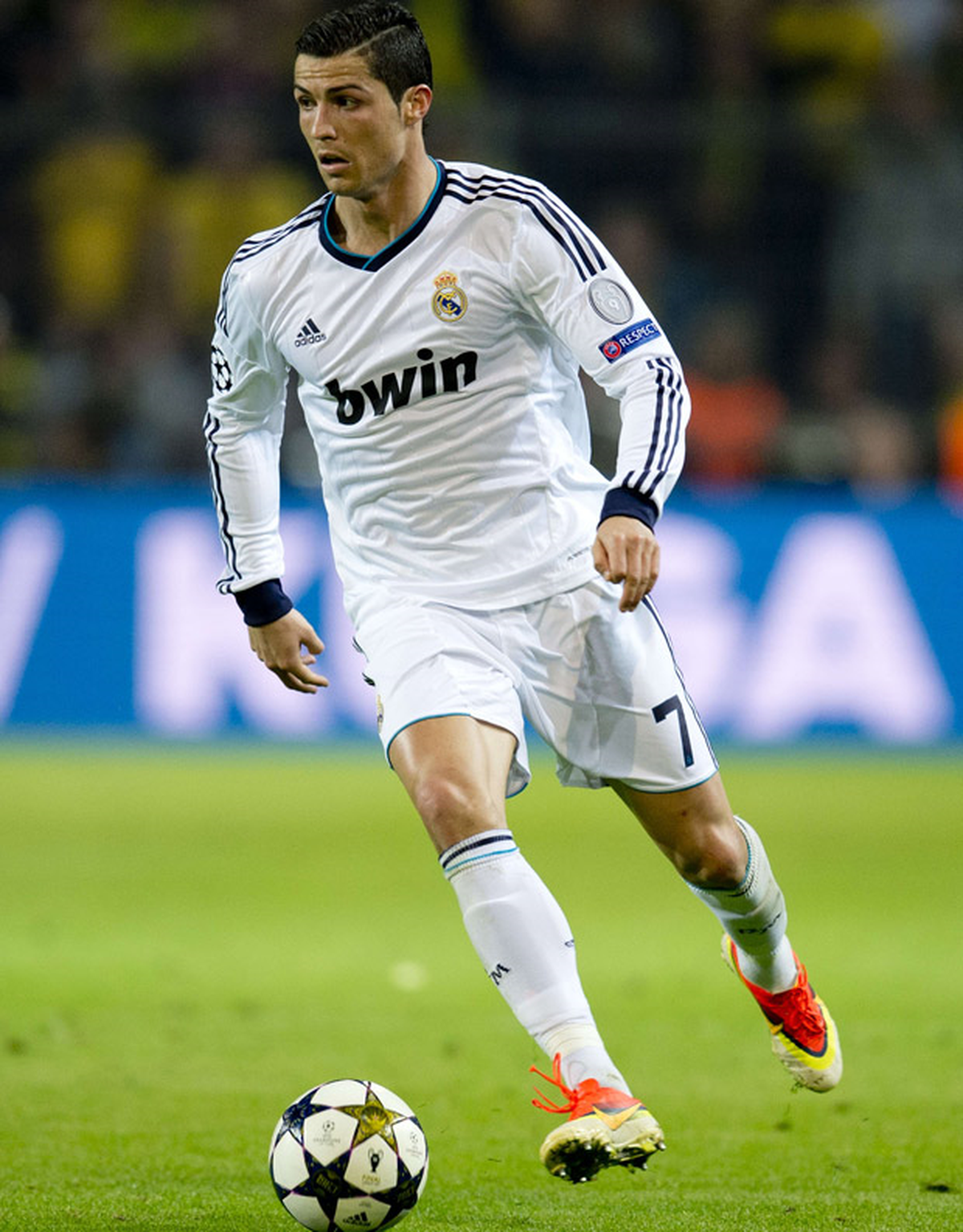
The result of a decision made early and never walked back
And this is precisely why he looks good in everything. Not because he has great taste — though the better eras suggest he does. Because the body underneath is engineered. Shoulders that sit right. A chest that fills a shirt without straining it. A waist that gives every jacket its natural shape. A posture that was built in a gym at 3am for twenty years running. He didn't find the right clothes. He built the right canvas first, and then anything he puts on that canvas works.
You cannot buy that at any price point. It is the one thing in fashion that has no shortcut and no substitute.
The Eras
Not every era is equal and being honest about that is part of actually respecting him.
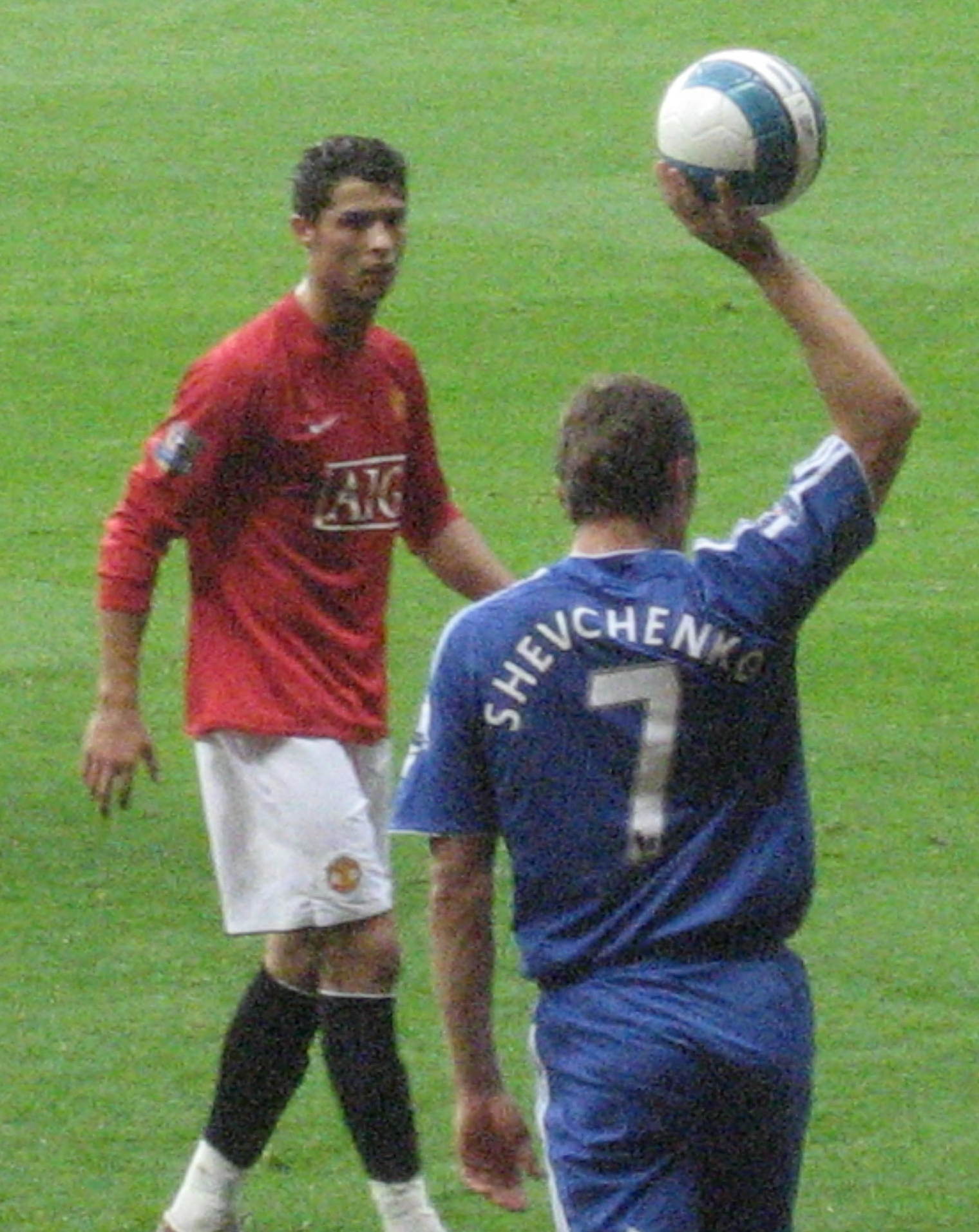
Old Trafford, 2004 — the rhinestone years. The confidence dressed him first.
2004 – 2007 · Old Trafford, young and arriving. The fashion world hated this era. The bleached tips, the tight shirts, the visible bling, the accessories stacked on accessories. But looking back — that was a kid from Madeira showing up at the biggest club on the planet and refusing to shrink. The confidence was the style. Before the fits even registered, you felt the energy of someone who was exactly where he decided to be. That energy dressed him first. The clothes came second.
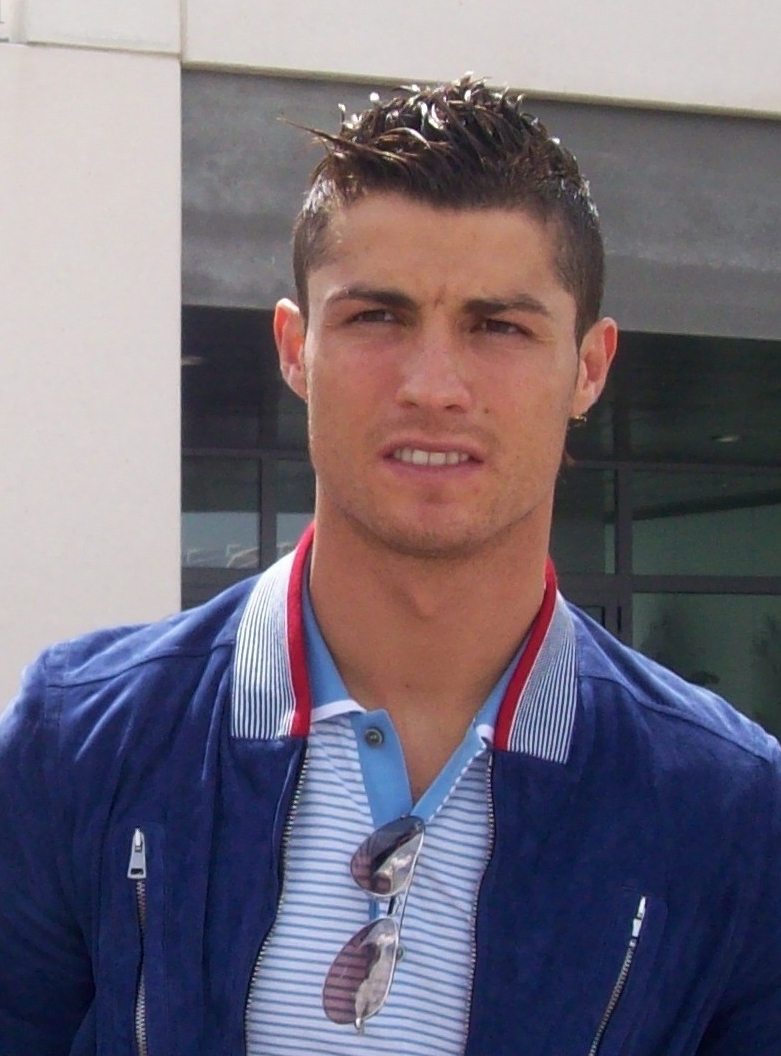
The pop-culture crossover era — athlete as style figure, fully realised
2007 – 2010 · The Paris Hilton era, full pop-culture crossover. When he was being photographed alongside Paris Hilton — someone who genuinely understood that celebrity is its own aesthetic — something shifted. He wasn't a footballer doing fashion. He was a peer in that world. Tight-fit casual at its most intentional: crew-necks that followed the shoulder, trousers with a real break, shoes that were considered. He was building, without knowing it, the template for the athlete-as-style-figure that every sports brand now tries to manufacture and can't.
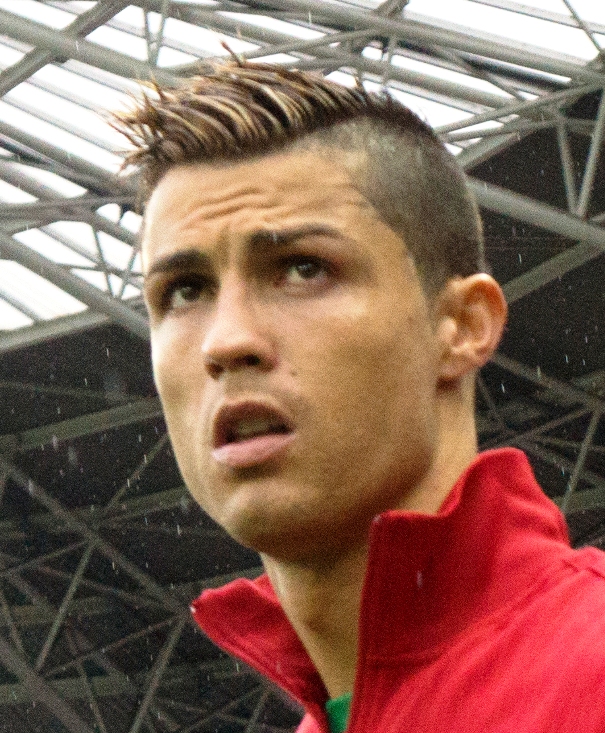
The Irina Shayk years — his fashion peak, and it wasn't even close
2010 – 2015 · The Irina Shayk years — this is the one. I'll just say it: the Irina era was the best he has ever looked. Full stop. When you're sharing your life and your public image with one of the great supermodels of her generation, the visual standard around you rises. You either meet it or you don't. He met it. Monochromatic, well-cut leather jackets, shirts with real structure, minimal accessories used with actual intention. He understood proportion. The photographs hold up because both of them knew that a strong visual has to be composed, not just assembled.
2018 – Present · The Saudi chapters. Okay, being honest — the very tight jeans, specifically, I don't understand them. He has unreal calves. Genuinely incredible calves. But a great calf does not need a jegging. The skinny-jeans-with-a-blazer combination that keeps reappearing belongs to a moment that has passed. He is not someone who needs clothes to announce his body — his presence does that before he even sits down. The tightness reads as effort where none is needed. You don't need to trace a great body. You frame it.
The Actual Lessons
Fit is the only non-negotiable
Before colour, before brand, before season — does this thing actually fit your body? A perfectly fitted high-street piece destroys a badly-fitted luxury one every time.
What you look like getting dressed is decided long before you open the wardrobe
Sleep. Water. Movement. Discipline. These are the most powerful grooming products in existence. They're also free — which is exactly why nobody in fashion talks about them.
Confidence in the mirror isn't arrogance — it's preparation
Ronaldo looks in the mirror knowing he earned what he sees. That direct, unbothered relationship with his own image is what makes every photograph of him radiate. It's not a personality trait. It's a posture that follows from a practice.
The detail obsession migrates
His attention to the smallest things — the crease in a boot, the exact angle of a free kick — is the same instinct that makes him tuck a shirt right and stand still in a photograph like he belongs in it. When you're obsessive about excellence in one area, it bleeds into everything.
Know which era you're in
The rhinestones worked because he was 20 and arriving. The monochromatic tailoring worked because he was 28 and had nothing left to prove. The lesson isn't to copy an era. It's to be honest about who you actually are right now and let the clothes follow that truth.
Let the body breathe
A great body doesn't need to be announced. It needs space — a jacket that sits right at the shoulder, a trouser with a clean line, a shirt that actually moves. Tight isn't always the answer. Sometimes the most powerful silhouette is the one that leaves something.
Beyond the Sport
Go into a boardroom. Go backstage at a runway. Go into a hospital, a film set, a recording studio, a gym in a city you've never been to. You will find someone who knows his name, watches his videos, has his image saved somewhere as a private reminder that a certain standard is possible.
The corporate guy in the sharpest suit who still has CR7 as his screensaver. The actor who schedules his workouts against Ronaldo's documented regime. Other athletes who will flat out tell you he changed how they think about their body. Doctors. Singers. Models. The breadth of who claims him as an influence tells you everything about what he actually represents.
It's not football. It's not fashion. It's not even money. It's the idea that total commitment to the details of yourself — your body, your craft, your standard, your presentation — produces a kind of magnetism that no stylist can engineer and no campaign budget can buy.
I've moved through different jobs, different rooms, different versions of myself over the years. Every single time I was preparing to show up somewhere — really show up — there was always that same reference point. Not what he was wearing. What he embodied. The standard that existed before the outfit was even chosen.
“Across every room I've walked into, every version of me that had to show up and be seen — he was always the reference. Not the clothes. The standard behind the clothes. Still my king.”
Spend less time in stores and more time becoming. Sleep more. Move more. Stand like you mean it. Wear things that actually fit and walk into the room like you built the right to be there. That's the Ronaldo style lesson — and it predates every outfit he has ever worn.